What Is a Closing Disclosure? Everything Homebuyers Need to Know

What Is a Closing Disclosure?
A closing disclosure is a five-page-long mortgage document that shows the final details of a home loan such as the terms of the mortgage, loan amount, interest rate, monthly payment, and all closing costs connected to the purchase and it is designed to help borrowers clearly understand what they are agreeing to before signing the final loan paperwork. It gives a full breakdown of the costs and financial responsibilities tied to the mortgage.
For most home loans, lenders are required by federal law to provide a closing disclosure to borrowers. The document is part of the rules created under Regulation Z of the federal Truth in Lending Act (TILA). These laws were made to protect consumers by making loan information easier to understand and compare.
When Do You Receive a Closing Disclosure?
Borrowers usually receive the closing disclosure three business days before closing, known as the “three-day rule.” This waiting period gives homebuyers time to carefully review their final loan details before signing.
The rule is meant to protect borrowers by ensuring they are not rushed into a major financial decision. It allows time to review loan terms, costs, and payments, and to ask questions if something looks off.
If major changes are made to the loan, a new closing disclosure may be issued and the three-day period can restart.
The document may be sent by email, online portal, mail, or in person, so it’s important to review it as soon as it is received.
What Information Is Included in a Closing Disclosure?
A closing disclosure contains the final details of a mortgage loan and the costs connected to buying a home. Each section of the document explains a different part of the loan so borrowers can clearly see what they are expected to pay both at closing and over time.
Loan Terms
One of the main sections of the closing disclosure focuses on the loan terms. This area explains the amount being borrowed, the interest rate, and the estimated monthly mortgage payment. Borrowers can also see whether the interest rate is fixed or adjustable.
The document may also include details about special loan features, such as prepayment penalties or balloon payments. A prepayment penalty is a fee charged if the loan is paid off early, while a balloon payment is a large payment due at the end of the loan term. These details are important because they can affect the total cost of the mortgage in the future.
Closing Costs
The closing costs section lists the different fees connected to the home purchase and loan process. These costs can include lender fees, appraisal fees, title services, government recording fees, and other expenses required to finalize the transaction.
The disclosure also shows prepaid costs and taxes that must be paid upfront at closing. This may include homeowners insurance premiums, property taxes, or prepaid mortgage interest. Reviewing these charges carefully can help borrowers understand exactly where their money is going.
Cash to Close
The cash to close section shows the total amount the buyer must bring on closing day. This amount is based on several factors, including the down payment, closing costs, deposits already paid, and any credits provided by the seller or lender.
Because this section combines all final financial adjustments, it gives borrowers a clearer picture of how much money they need before the transaction can be completed.
Loan Calculations
The closing disclosure also includes loan calculations that explain the long-term cost of borrowing money. This section shows the total amount the borrower may pay over the life of the loan, including principal, interest, mortgage insurance, and other finance charges.
Borrowers will also see the annual percentage rate, commonly called the APR. The APR reflects the yearly cost of the loan after certain fees and charges are included. Unlike the basic interest rate, the APR provides a broader view of the total borrowing cost, making it easier to compare mortgage offers from different lenders.
Closing Disclosure vs. Loan Estimate
Why Should You Compare Both?
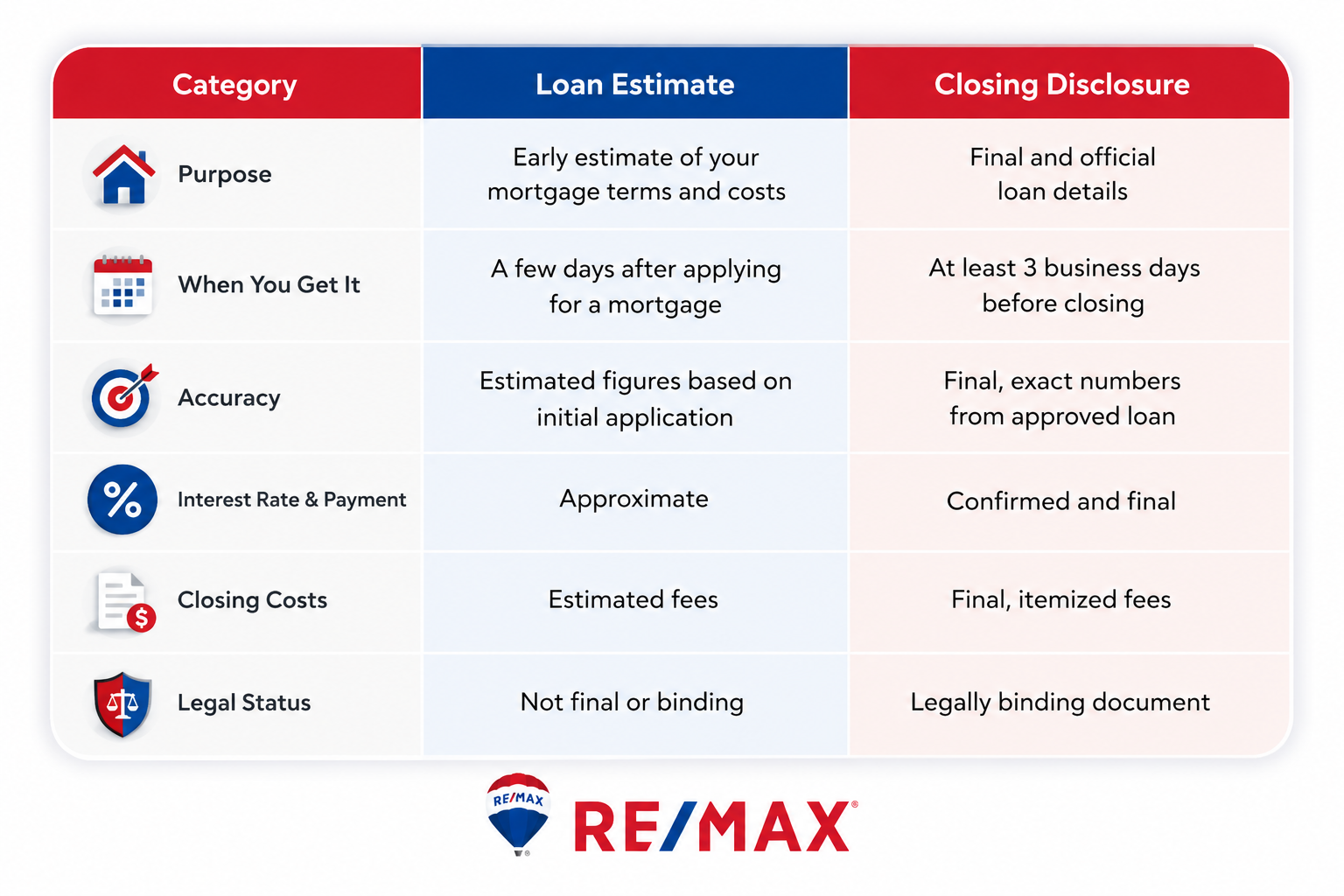
Comparing the loan estimate and closing disclosure helps you see if any loan terms have changed and spot unexpected fee increases before closing. It also helps prevent surprises at the last step of the home buying process. Even small differences can affect your total costs, so reviewing both documents carefully is important.
How Do Changes Affect Closing Costs?
Some changes between the loan estimate and closing disclosure are normal, such as updates to taxes or third-party fees. However, larger changes like a higher interest rate or increased lender fees can raise your cash to close. That’s why it’s important to review everything carefully, understand what changed, and confirm the details before signing.
How to Read a Closing Disclosure
- Check Your Personal Information – Make sure your name, property address, and loan details are correct to avoid issues at closing.
- Review Loan Details – Confirm key terms like loan amount, interest rate, and monthly payment match what your lender provided.
- Compare Closing Costs – Check all fees listed and understand what each charge is for before moving forward.
- Confirm Cash to Close Amount – Review the total amount you need to bring on closing day, including down payment, fees, and credits.
- Understand Loan Calculations – Look at the total long-term cost of your loan, including total payments, finance charges, and APR.
Make Sure Everything Is Correct in the Closing Disclosure
Before signing, carefully review your closing disclosure to make sure all details are accurate. Check that the loan amount matches what you agreed on, confirm the interest rate, and review all fees and charges listed. Also make sure your personal information and the property details are correct. If anything looks wrong or unclear, contact your lender right away so it can be fixed before closing.
Can a Closing Disclosure Change?
Yes, a closing disclosure can change, but only certain parts of it. Some items can be updated without much impact, while others are considered major changes that may require a new disclosure and a new waiting period before closing.
What Can Be Changed
These are common updates that are usually allowed and expected:
- Small third-party fees (like appraisal or title fees)
- Final tax adjustments
- Minor clerical or spelling corrections
- Updated estimates that are finalized closer to closing
These changes are normal because some costs cannot be confirmed until the final stages of the loan process.
What Cannot Easily Be Changed
These are major loan terms that are more strictly controlled:
- Loan amount
- Interest rate (if not properly locked or changed beyond allowed limits)
- Loan program or type (for example, switching loan products)
- Adding new fees that significantly increase closing costs
- Introducing new terms like prepayment penalties or balloon payments
When Changes Matter More
If major loan terms change, the lender must issue a revised closing disclosure. This also restarts the three-business-day waiting period before closing which ensures the borrower has enough time to review and understand the updated loan details before signing.
Final Thoughts
A closing disclosure is one of the most important documents you will review during the home buying process. Taking the time to go through every detail carefully can help you avoid mistakes, unexpected costs, or confusion on closing day.
This document is designed to give you a clear and final breakdown of your mortgage terms and all related costs. It brings everything together so you can see exactly what you are agreeing to before you officially complete the purchase.
Before signing any final loan documents, it is always a good idea to ask questions if something is unclear. Lenders and loan officers are there to explain the details and help you understand your responsibilities.
Find Your Place by the Water
Wake up to lake views, enjoy peaceful sunsets, and live the lifestyle you’ve always imagined. Explore beautiful homes that capture the spirit of the lakefront dream.
View Our Lakefront ListingsRecent Blog

Can I Buy a House With Bad Credit? Here's What You Need to Know
The good news is that bad credit doesn't automatically shut the door on homeownership, it just means you'll likely need to take a slightly different path to get there.
Read MoreCan I Buy a House With Bad Credit? Here's What You Need to Know
Do You Have to Sign a Buyer Broker Agreement in Iowa?
Yes, it is. Since July 1, 2024, Iowa law has required buyers to sign a written agreement with their real estate agent before that agent shows them a property.
Read MoreDo You Have to Sign a Buyer Broker Agreement in Iowa?
Can I Buy or Make an Offer on a House Without Earnest Money?
If you're putting together an offer on a house and wondering whether you can skip the earnest money, the short answer is yes, technically. There's no law that says you have to include it. But in practice, an offer without earnest money is almost always turned down.
Read MoreCan I Buy or Make an Offer on a House Without Earnest Money?
Average Realtor Commission in Iowa: What Sellers and Buyers Should Know in 2026
You can expect to pay somewhere in the range of 5.7% to 5.9% of your home's sale price in total realtor commission.
Read MoreAverage Realtor Commission in Iowa: What Sellers and Buyers Should Know in 2026
How to Make an Offer on a House: A Step-by-Step Guide
Making an offer on a house involves submitting a written proposal that includes your price and purchase terms for the seller to review.
Read MoreHow to Make an Offer on a House: A Step-by-Step Guide
Can I Back Out From a Purchase Agreement?
Yes, you can back out from a purchase agreement, but what happens next depends on where you are in the process.
Read MoreCan I Back Out From a Purchase Agreement?
Are Homes Usually Inspected Before Listing?
No, homes are not usually inspected before listing. In most real estate transactions, the home inspection takes place after a buyer submits an offer and the seller accepts it. At that point, the buyer typically hires a professional inspector to evaluate the property's condition and identify any issues that may affect the purchase.
Read MoreAre Homes Usually Inspected Before Listing?
Can I Make an Offer Without a Real Estate Agent in Iowa?
The answer is yes, you can make an offer on a house without a real estate agent in Iowa. While many buyers choose to work with an agent during the home buying process, state law does not require you to have one when submitting an offer. This means you can represent yourself and communicate directly with the seller or the seller's representative if you decide to do so.
Read MoreCan I Make an Offer Without a Real Estate Agent in Iowa?
What Is the 3-3-3 Rule in Real Estate? A Guide to Homebuying
The 3-3-3 rule means having three months of emergency savings, saving an additional three months' worth of mortgage payments, and getting three property evaluations before buying a home.
Read MoreWhat Is the 3-3-3 Rule in Real Estate? A Guide to Homebuying
What Is a Bill of Sale in Real Estate?
A bill of sale is a legal document that records the transfer of ownership of personal property from the seller to the buyer.
Read MoreWhat Is a Bill of Sale in Real Estate?
Closing Documents: What They Are and Why They Matter in Real Estate
Closing documents are the final legal papers signed during a real estate closing to complete the home sale and transfer ownership.
Read MoreClosing Documents: What They Are and Why They Matter in Real Estate
Closing Costs Explained: Common Fees Homebuyers Should Expect
Buyers usually pay about 2% to 6% of the loan amount in closing costs, depending on the lender, loan type, and location.
Read MoreClosing Costs Explained: Common Fees Homebuyers Should Expect